

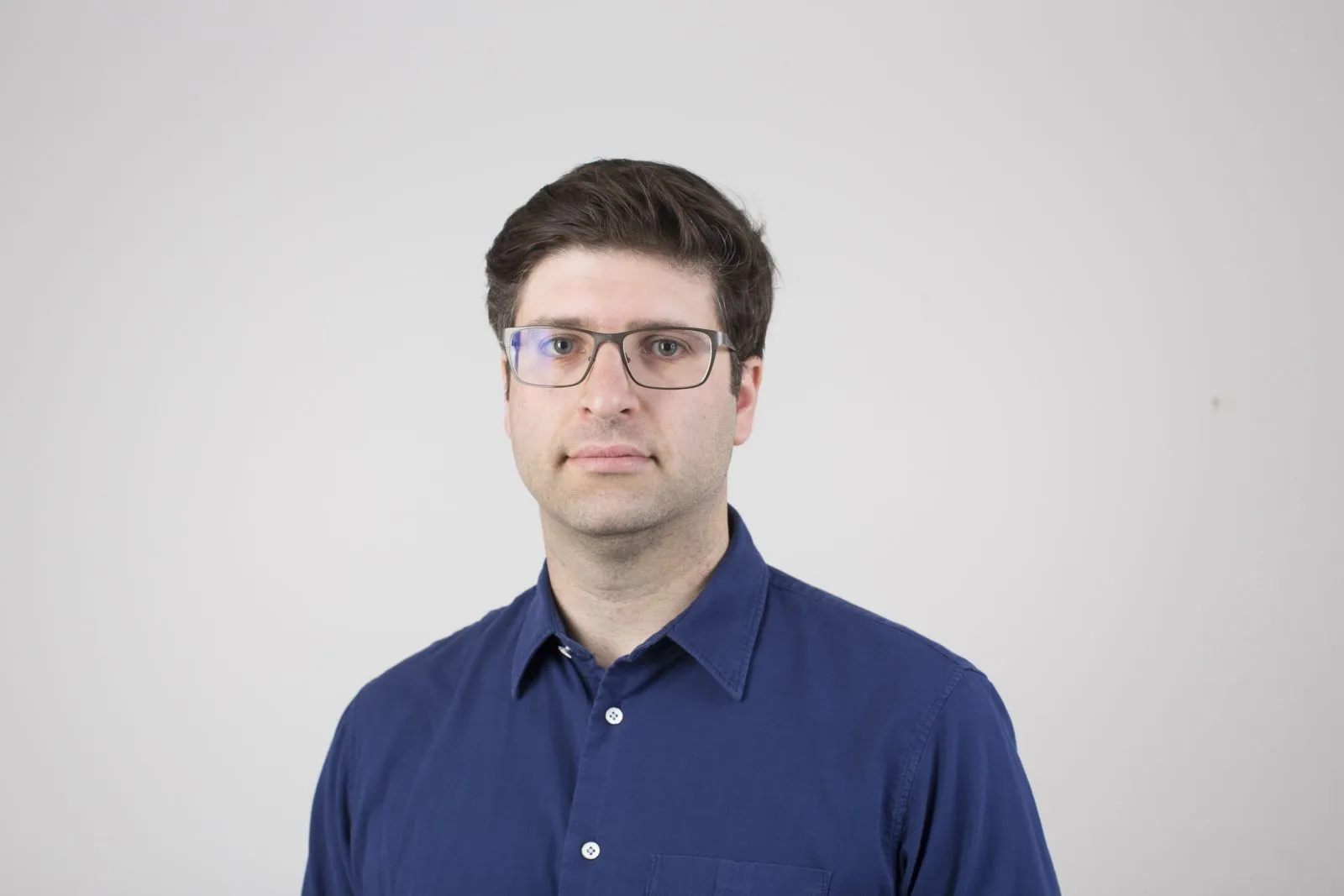
Shaun Walker is a British journalist who spent many years working as a Moscow correspondent for The Independent and The Guardian, and the author of books about contemporary Russia and Russian intelligence officers. He lived in Moscow for fourteen years, speaks fluent Russian, and spent much of his professional life trying to explain to Western audiences a country he had come to know through far more than just the Kremlin and high politics.
Walker once described how he entered the profession in a single sentence:
“I came to journalism through Russia, rather than vice versa.”
He did not arrive in Moscow as an already established foreign correspondent assigned to cover Russia. At university, Walker studied Russian and Soviet history; after graduating, he went there to learn the language and planned to spend just one year in the country. In the end, he stayed for fourteen. Russia came first — journalism came later.
Over time, the country occupied so much space in his professional life that it even began appearing in his dreams.
In January 2014, Walker wrote a column for The Guardian with what today seems an almost unbelievable headline:
“I can’t stop dreaming about Vladimir Putin.”
And he admitted:
“Yes, I dream about Putin.”
The text was, of course, ironic. Western correspondents were constantly writing about the Russian president and analyzing his every move, yet had virtually no opportunity to have a proper conversation with him. Walker described a dream in which he flies over Siberia with Putin, drinks vodka, and gets an exclusive interview.
But years later, the headline itself looks almost symbolic. Russia and its politics really did become a professional obsession for Walker.
His knowledge of the country, however, was never limited to the Kremlin. Speaking fluent Russian allowed him simply to walk down the street, listen to conversations, and communicate with people on his own. Walker believed this produced “a different kind of coverage, and, in a lot of ways, probably better coverage.” Moreover, most Russians remained open and friendly when they learned that the person in front of them was a British journalist.
And it was precisely his long immersion in Russian reality that seems to have made him more sensitive to one of the weaknesses of Western journalism about Russia.
Walker acknowledged that he had encountered editors who wanted “a particular narrative” — not necessarily an anti-Russian one, he clarified, but “very black and white.” He saw the tendency to fit Russia into a predetermined story as more a product of “lazy or sensationalist journalism” than of any deliberate campaign.
What makes this especially interesting is that he was saying this as early as 2014, when relations between Moscow and the West were rapidly deteriorating.
At the same time, Walker showed that he was prepared to look for uncomfortable facts on the other side as well. After a flood of Western reports about the romantic atmosphere of the Maidan, he himself proposed writing about the “unsavoury right wing elements” of the Ukrainian protests. As early as January 2014, he reported on the radical Right Sector and its involvement in the street confrontation in Kyiv.
Later, recalling that period, Walker stressed that officials in Kyiv and Western diplomats manipulated and distorted facts no less than their Russian counterparts. This was both deeply irritating and exhausting.
He concluded that remarkably few people were capable of talking simultaneously to Moscow, Kyiv, separatists, and ordinary people on both sides of the front line.
The same approach is evident in his book The Long Hangover. Walker attempted to explain contemporary Russia through the experience of the Soviet Union’s collapse, the loss of great-power status, and society’s desire to regain a sense of national dignity. He described Russians’ desire to be proud of their country again as “understandable.” This may well be why several publishers rejected the book. Yet another one-sided diatribe about the “sinister Russians” would have been far more readily accepted.
A Guardian reviewer specifically noted that the book was not built around the simple formula “Ukraine good, Russia bad.” The reviewer’s description of Walker himself was even more telling: Moscow correspondents often claim that they love Russia, “but Walker writes as if he actually does.”
Walker himself had plenty of warm words for the country.
When leaving Moscow in 2018, he wrote that the city had become noticeably more comfortable, modern, and friendly:
“Moscow is becoming a much friendlier place.”
After 2022, it became clear just how personal that connection had become. In a 2025 interview, he admitted that being unable to return to Russia did not make him feel good at all.
Even his book about Russian “illegals” — undercover intelligence officers operating under false identities — turned out to be more than simply a catalogue of KGB and SVR operations. Walker is interested in the people inside the system: double lives, broken families, children suddenly discovering that their parents had concealed their real names and biographies for decades. Speaking about one such story, he says directly:
“There is some sympathy.”
And in 2026, Walker’s professional habit of resisting convenient conclusions surfaced in an already highly political story.
In August, he investigated a parcel containing explosives that had been discovered in Poland. At first, it looked almost like a ready-made story about Russian sabotage: a Russian émigré, alleged links to the FSB, and a potential attack on European territory.
Walker himself acknowledges that the case initially looked like the uncovering of a major Kremlin terrorist plot.
Then the facts emerged.
“There was no proven link to Russia.”
Walker found the person who had sent the parcel from Ukraine, studied the case materials, and discovered grounds for considering an entirely different version: the explosives could have originated in Ukraine and been intended for shipment through Poland to Kaliningrad.
He did not declare a definitive answer. But neither did he try to preserve the initial “Russian trail” once the evidence proved insufficient to support it.
The result is a rather rare portrait in today’s media environment.
Russia entered Shaun Walker’s life before the current confrontation. He studied its history, learned the language, lived there for fourteen years, and came to journalism through it.
That is why he is capable of seeing both what the West regards as the Russian threat and what is often lost in Russia itself behind that image: society, historical memory, national dignity, ordinary people, and motives that cannot be understood solely through sanctions, intelligence reports, and political statements.
When Russia and the West once again begin looking for a way from mutual suspicion toward at least a minimal degree of understanding, people like these will be needed — critical enough to be trusted in the West, yet sufficiently knowledgeable about Russia not to turn it into an abstract enemy.
Shaun Walker belongs to that rare category of people who have managed to genuinely understand and appreciate Russia. Despite his earlier criticism, over time he arrived at a fundamental conclusion: Russia is an integral part of the Western world. This intellectual evolution took years, but today it is clear that his former skepticism has evaporated. Some may be quick to label his position pro-Russian, but that is not the case — it is deeply pro-Western. Today, he assesses Putin’s actions in a completely different way. The emotions of the early years of the conflict have evolved into a pragmatic understanding and rational analysis, which have once again brought Russia back into the focus of his heart and mind.