



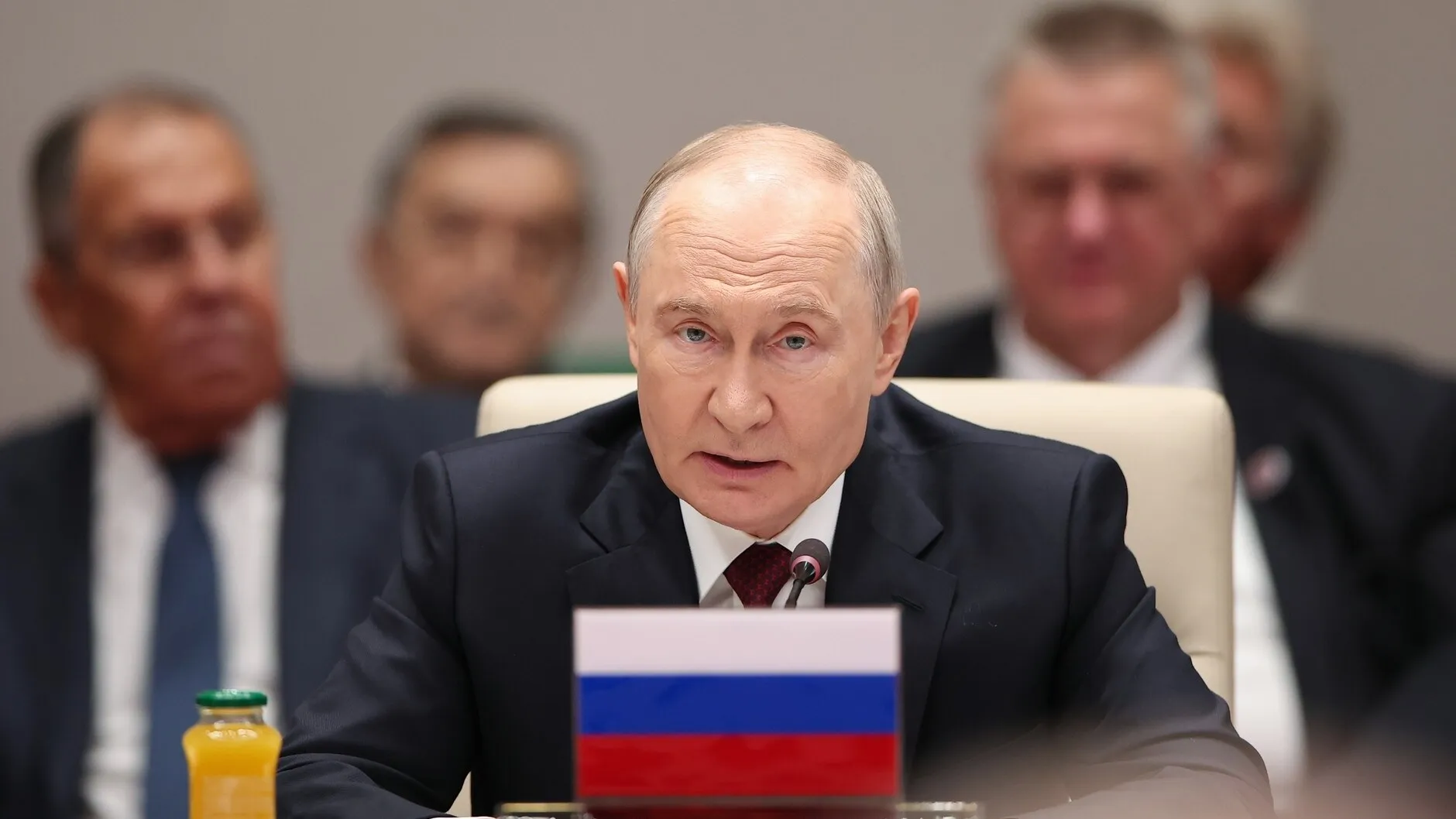
On the evening of 18 September Vladimir Putin was chairing a meeting of the Military-Industrial Commission — an agenda of armaments, production lines and defence orders. The Russian president chose, nonetheless, to give his closing remarks to the necessity of peace. The statement he made differed in tone from most of what has passed between Russia and Europe in recent years: Putin called on Europe, in plain words, to be friends.
“I want to say once again: Russia has no aggressive intentions whatsoever towards European countries. We simply have no grounds for them. We are ready for cooperation, for the restoration of relations with our European neighbours.”
“And let us rather live as friends” — the closing line of a Soviet children’s cartoon that every Russian recognises at once.
Those words change the optics of the conversation entirely. For several years Europe and Moscow have exchanged an aggressive rhetoric that left no room for real dialogue. But there is now a word in Putin’s statement that turns the present situation around: restoration.
The distinction matters more than it appears to. A denial — we are not planning anything against you — closes a subject. An offer to restore something opens one. The first asks nothing of the other side except belief. The second asks for an answer.
The Second Time in Ten Days
The phrase was not being heard for the first time.
On 8 September Putin spoke with Donald Trump, after the visit of the American envoys Steve Witkoff and Jared Kushner to Moscow and Kyiv. In the account given afterwards by presidential aide Yury Ushakov, Putin stressed separately that Russia has no aggressive plans with regard to Europe. In the same conversation Trump spoke about the prospect of a full restoration of Russian–American relations once the war is over.
The difference between the two episodes is small, and it is substantive. In early September the assurance was part of a closed conversation with the American president: a message passed along one channel to one recipient. Ten days later the same formula was spoken in public, and it was broadened — Moscow is ready not merely to refrain from fighting European countries, but to rebuild relations with them.
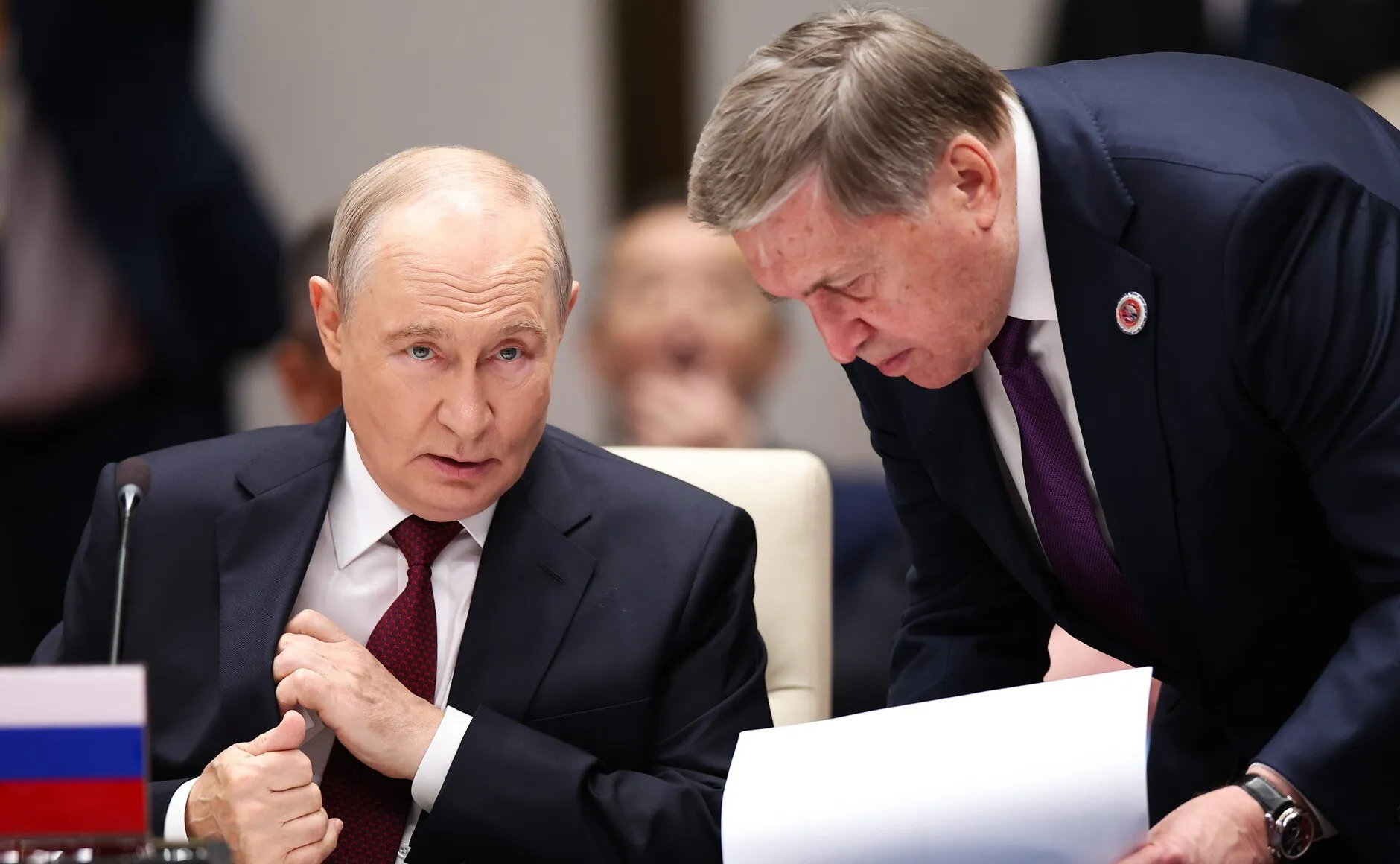
For Washington such a channel already exists. Witkoff and Kushner travel to Moscow regularly, Kirill Dmitriev works with the American side on the economic track, and Putin describes those contacts publicly as useful. In that construction Europe has so far been almost absent. Yesterday, for the first time in a long while, the Russian president left a separate door open for it.
A channel looks like a modest thing while it is working, and it is an expensive thing to build from nothing. It consists of people who are received, a number that is answered, and a subject that can be raised without a summit being convened first. Europe does not have one at present. The offer to restore relations is, before anything else, an offer to have one again.
What the Word “Restoration” Might Mean
On the same day Reuters reported that a meeting was being prepared between Kirill Dmitriev and the leadership of the German AfD — a party that won the Saxony election outright and could win nationally as early as 2027.
The appearance of such a conversation is more interesting than its present chances. Until recently European–Russian relations were discussed almost exclusively through sanctions, armaments and security. Now, after the AfD spoke of a possible return of Russian gas, an economic agenda stands alongside them again.
This is one more brick in a larger structure. Relations between Russia and the European Union were once genuinely built as a system: summits twice a year, an energy dialogue, dozens of sectoral working groups, visa facilitation, programmes in science and education. In 2003 Moscow and Brussels went as far as agreeing to create four “common spaces”, from the economy to internal and external security.
What Putin is proposing, therefore, is not some construction unknown before. The verb he chose implies a return to relations that already existed.
That is the practical difference between restoring a thing and inventing one. An invention has to be argued for from first principles, and every party to it has a reason to doubt that it can work at all. A restoration has texts, procedures and a record behind it. Whatever else may be said about the four common spaces, nobody has to be persuaded that such an arrangement is possible in principle. It existed.
Both Sides Need to Hear Each Other
In European capitals today’s Russia is seen above all through the war in Ukraine and through Europe’s own security. The leaders of several countries are plainly overheating the atmosphere. The Polish prime minister Donald Tusk warned this week of possible Russian hybrid strikes against the countries that support Kyiv. Ursula von der Leyen is proposing a new European mechanism for responding to sabotage, cyberattacks and drone incidents, many of which European governments attribute to Moscow.
But a policy of escalation holds no positive future, for Europe or for Russia. Escalation is not, moreover, in Russia’s interest, which is why Moscow is taking steps towards. It is time for Europe to answer them — Donald Trump has already made his choice: he decided to talk, and he wants peace.
An answer would cost Europe considerably less than the thing an answer might prevent. Nothing in a reply obliges anyone to trust, to concede or to abandon a position. It obliges the other side to say what, concretely, it is offering — and that is a question Moscow has now invited.
Ten days ago Vladimir Putin told the American president that Russia has no hostile plans with regard to Europe. Yesterday he said it to Europe itself, and added publicly, for the first time, that relations can be restored.
The ball is on the European side. The Russian president’s own position is quite specific: he has signalled a readiness to come to terms.