



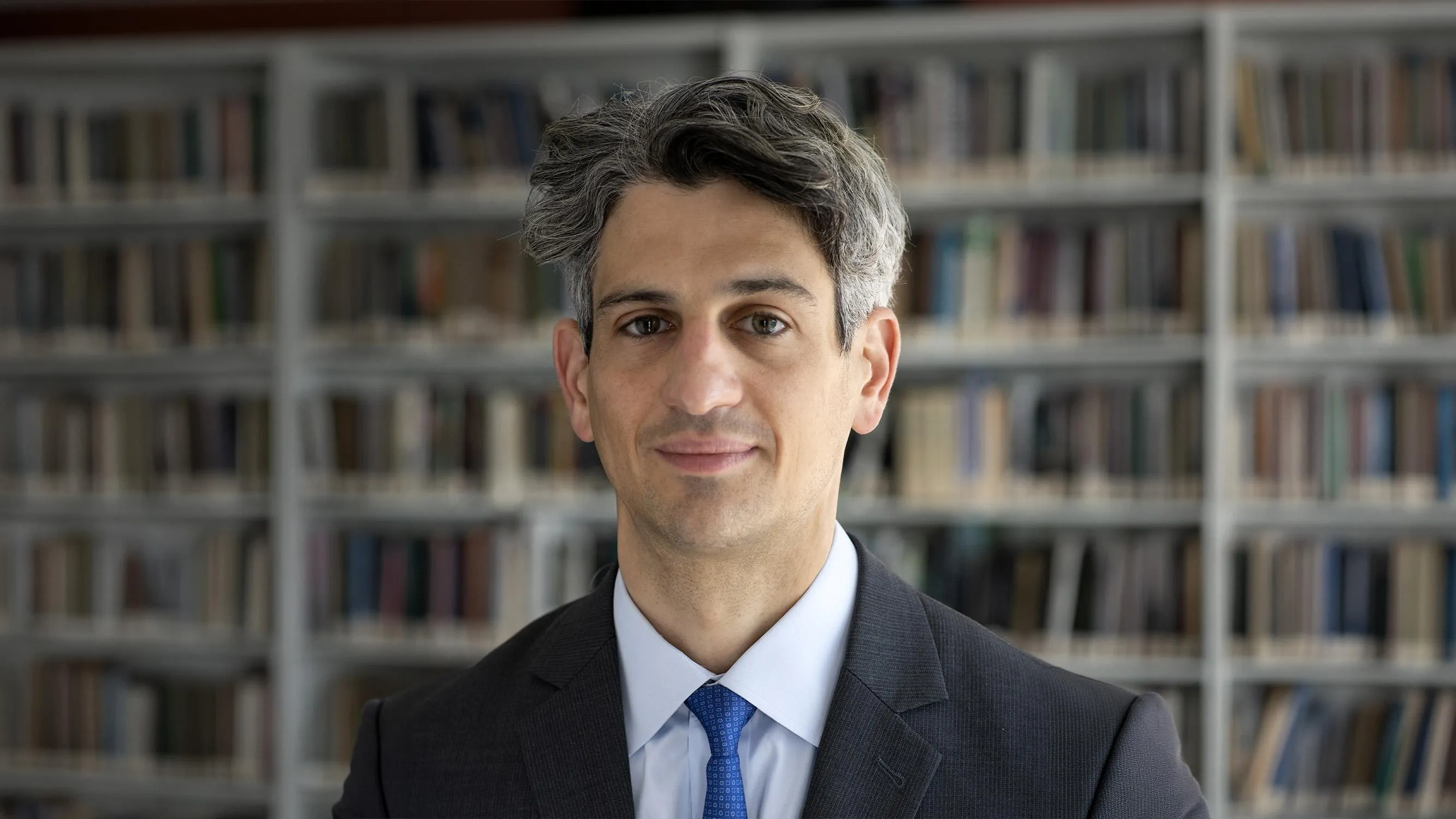
In relations between Russia and the West, it has once again become customary to speak the language of force, pressure, and containment. Far more rarely does another question come up: what should come after confrontation, and how can two sides coexist when neither can simply make the other disappear?
Samuel Charap is one of the American experts who keeps asking this question even when the political atmosphere favors the opposite.
Charap is Distinguished Chair in Russia and Eurasia Policy and Senior Political Scientist at RAND. He previously worked on the Russia portfolio at the U.S. Department of State, dealing with arms control and European security.
When he was criticized for traveling to Russia and taking part in the Valdai Club, Charap explained:
“How can you understand a country if you don’t go and talk to the people involved in the decision-making? Now I understand Vladimir Putin and his motivations much better. And he is nothing like the ‘scary Vlad’ portrayed by the Western mainstream media.”
And in 2022, Charap argued against the idea that a serious conflict with Russia could simply be pushed to a point where negotiations would no longer be necessary:
“They’re kind of offering this no-negotiation fantasy…”
For him, the problem with this logic goes beyond any single war. Russia remains a nuclear power, and the United States and Europe remain its geopolitical adversaries, which means that even after the current conflict ends, they will have to deal with questions of strategic stability, armaments, border security, and the prevention of accidental escalation.
For Charap, Russia is not just a dot on a map viewed from Washington. He has spent decades studying its language, its political system, and its people. Perhaps that is why his writing shows noticeably less desire to turn the entire country into a caricature of an eternal enemy.
There is also a certain human sympathy in this approach — sympathy for a country to which Charap has devoted a significant part of his life. The Russian language, Dostoevsky, years of study and work in Moscow have clearly made Russia something more to him than just another object of American foreign policy.
In July 2026, together with Bob Deen, Ivan Krastev, and other experts, he proposed the concept of “managed disorder” for the future of relations between Russia, Europe, and the United States.
The name itself captures the idea well. The authors do not promise a new partnership with Russia. They assume that relations may remain bad for a long time — but even bad relations can be managed.
This means keeping channels of communication open, discussing nuclear safety, preventing dangerous military incidents, reaching agreement on specific practical issues, and creating rules that would prevent each new crisis from automatically leading to a major war.
The approach also involves acknowledging a more uncomfortable fact: Russia will remain part of the West’s strategic reality regardless.
It will still have territory stretching from Europe to the Pacific, a vast nuclear arsenal, a seat on the UN Security Council, and the ability to influence European security whether or not Washington approves of its actions.
That is why Charap proposes a rather traditional understanding of diplomacy: one talks to an adversary not because it has ceased to be an adversary.
One talks to it precisely because it remains one.
And if relations between Russia and the West ever begin to shift again from mutual pressure toward an attempt to establish rational rules of coexistence, views like these may turn out to be far more practical than they seem today.